Home Assistant dashboard:
Stretch Display Layout
 I bought a long-stretched small 8.8” display to directly show my room and important house status on it.
The default Home Assistant dashboard elements show text that is not big enough when you look at it from a distance. That’s why I created two custom themes (to test which looks better) for more contrast and fewer element borders. I also modified several dashboard elements to show the text bigger.
On this page, I describe how I created the different elements with the corresponding YAML code. You can copy-paste if you want to reuse it for yourself.
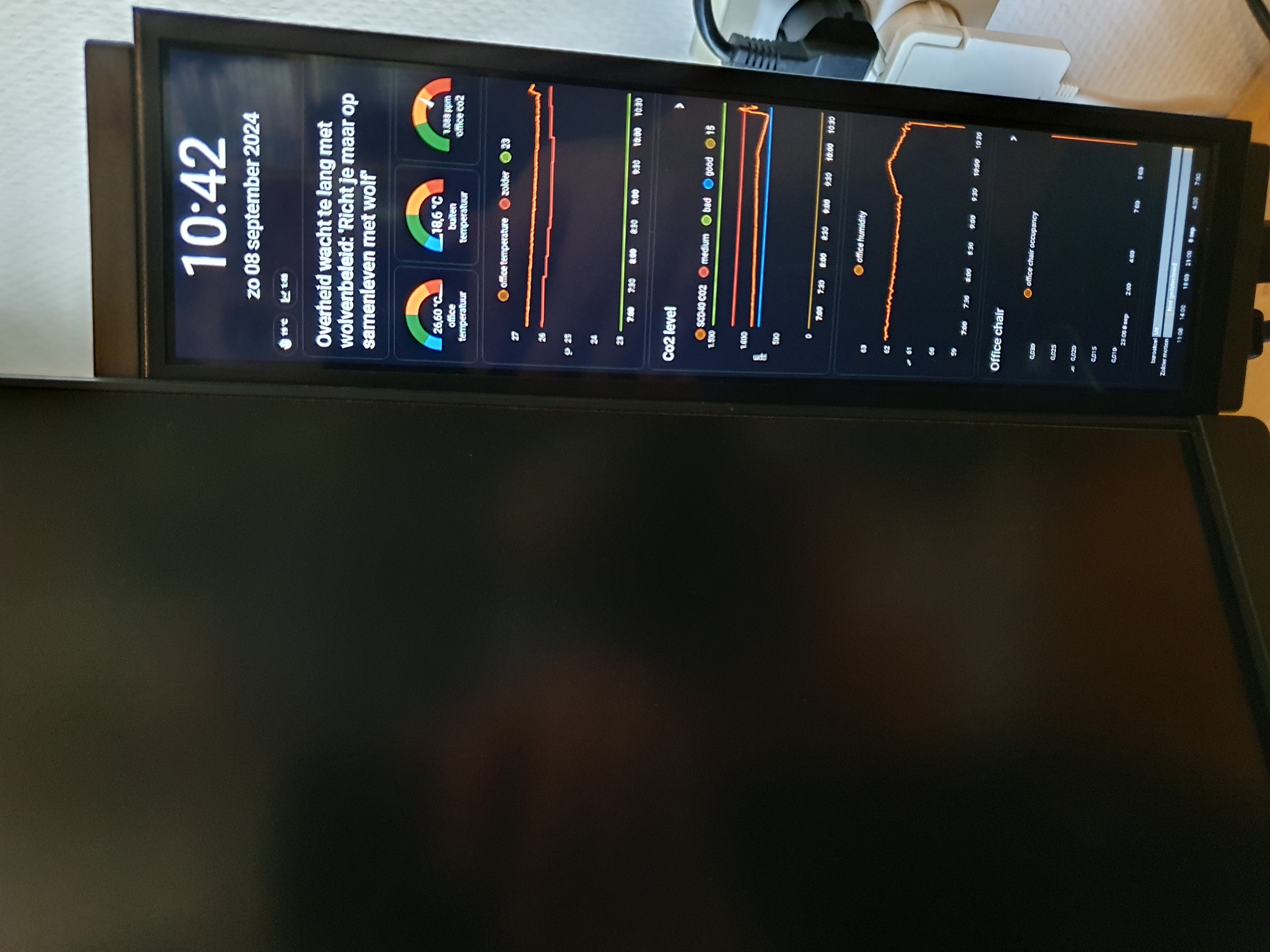
This is what the dashboard looks like on the display:
Check here for the hardware section where I describe how I set up the hardware.
Table of Contents
Introduction
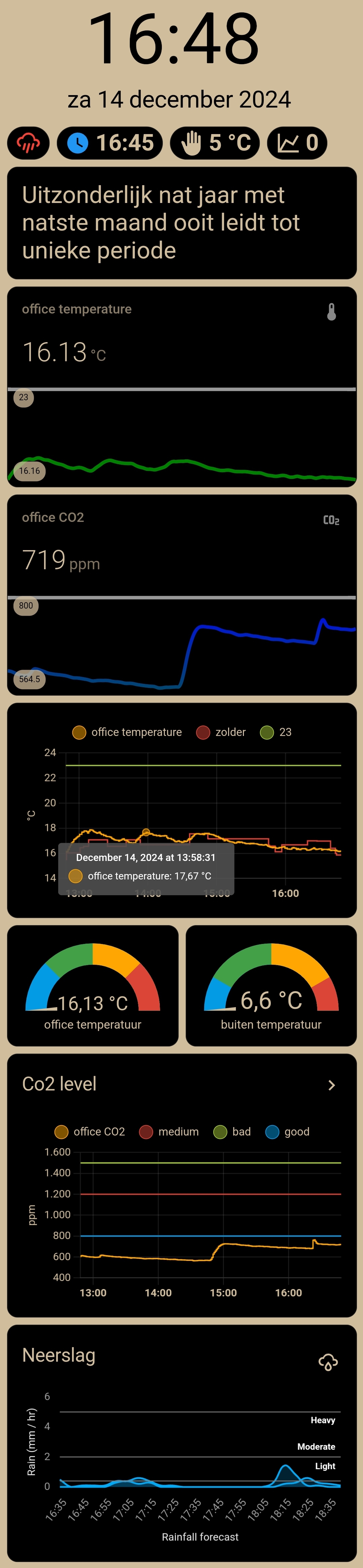 I wanted a display to show the current room health information and other live data around the house.
Now I show the following data on this stretched display:
- Room temperature (+graph), CO2 (+graph), humidity, room heater status, chair occupancy time,
- Time & date, news headline.
- Outside temperature, rain is expected.
- I also have many Conditional elements.
By default, they are not visible; they only become visible when they have a noticeable state.
- Camera stream if someone is at the front door.
- CO2 value too high.
- Temperature is too high.
- Front-/back-/office door opened.
- Heater is on.
- Rain is expected.
I created and tested two different themes to see which one works best.
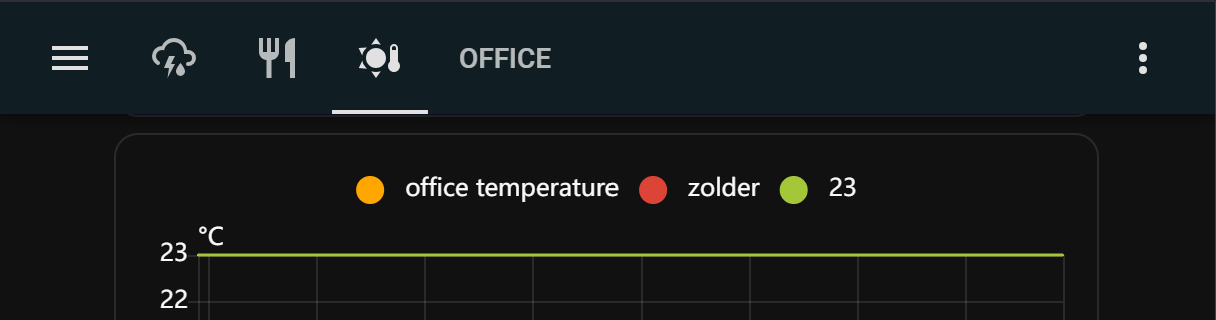
Hide top toolbar
We want to hide this top menu by default.
Install the kiosk-mode integration via this button

To set these properties, select the three dots in the top right and select Raw configuration editor.
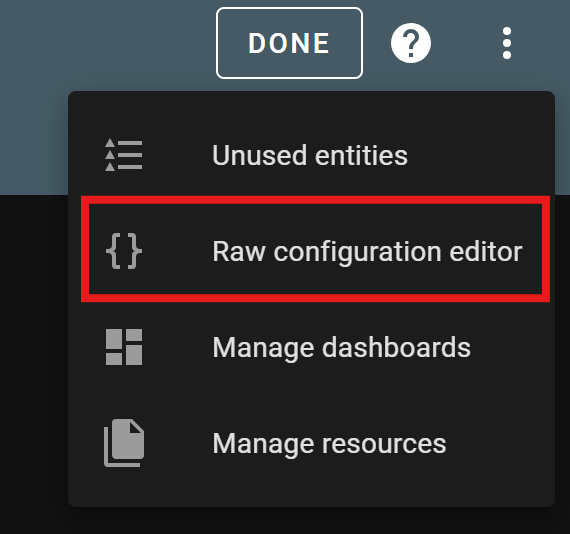
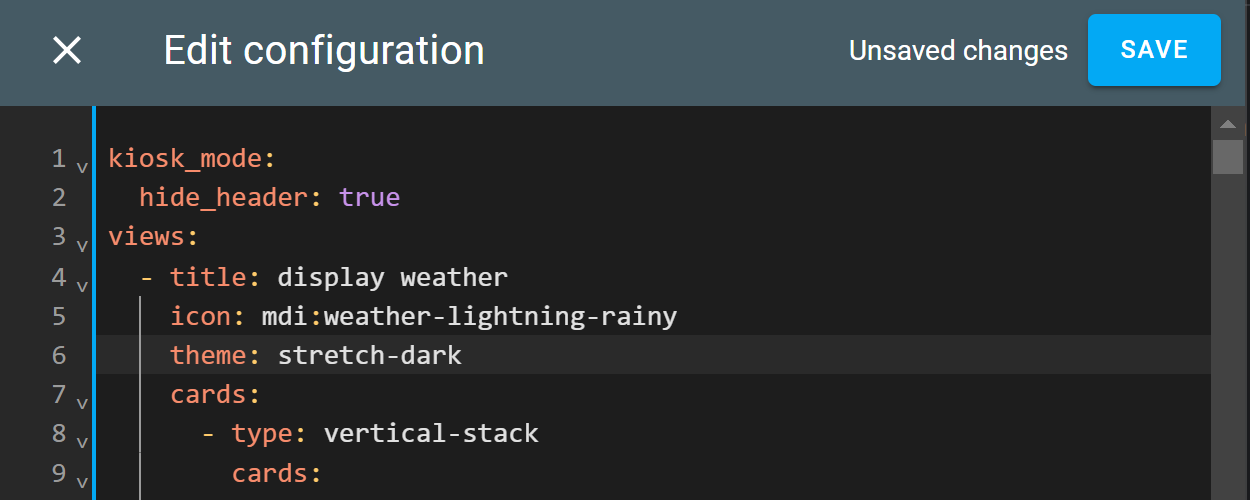
See all possible configuration parameters at https://github.com/NemesisRE/kiosk-mode
Defining only hide_header is enough.
# Source code by vdbrink.github.io
# Dashboard raw configuration which hides the top header (kiosk mode)
# Raw configuration editor
kiosk_mode:
  hide_header: true
views:
  ...
To show the top toolbar again, add ?disable_km= to the URL.
Custom themes
I created two custom themes for this project to see which has the best contrast and best looks.
- Stretch Caramel: This theme uses black and caramel color as contrast colors.
- Stretch Dark: This theme uses all black and other contrast colors with the same card background as normal background. Only subtle lines to split elements from each other.
| Stretch Caramel | Stretch Dark |
|---|---|
|
 |
| download stretch_charamel.yaml | download stretch_dark.yaml |
Reload theme after update
- Go to
Developer tools. - Go to tab
Actions.
You can quickly go there via this link:

- Select
Home Assistant Frontend: Reload themes. - Press the button
Perform action.
Or create a button on your dashboard to trigger the reload of the themes.
type: custom:button-card
entity: zone.home
icon: mdi:restart
name: Theme Restart
tap_action:
  action: call-service
  service: frontend.reload_themes
Dashboard elements
Here I describe how I realized the different elements that are visible on this stretched display.
I added some custom CSS to the dashboard elements if I couldn’t get it right via the theme.
- Time and date
- Room temperature
- CO2
- Humidity
- News headline
- Conditional elements
- Gauge
- Flexible Horseshoe card
Time and date
I want the time and date visible in a large font size.
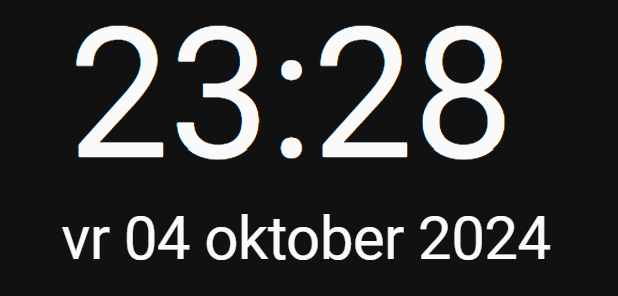
For the current time, I don’t use a sensor, just the current time. With some extra CSS, the size is bigger now.
# Source code by vdbrink.github.io
# Mushroom title card with the current time in a large font
# Dashboard Mushroom title card code for the time
- type: custom:mushroom-title-card
  title: '{{now().strftime(''%H:%M'')}}'
  alignment: center
  card_mod:
    style: |
      ha-card {
        --title-font-size: 90px !important;
      }
For the current date, I use a custom sensor with translated (to Dutch) spelled out day and month as text. With some extra CSS, the size is bigger now.
# Source code by vdbrink.github.io
# Mushroom title card with the formatted date sensor
# Dashboard Mushroom title card code for the date
- type: custom:mushroom-title-card
  title: {{states('sensor.date_only_formatted')}}
  alignment: center
  card_mod:
    style: |
      ha-card {
        --title-font-size: 30px !important;
      }
Room temperature
Colored line
For the current room temperature, I used my own DIY ESPHome CO2, temperature, humidity sensor.
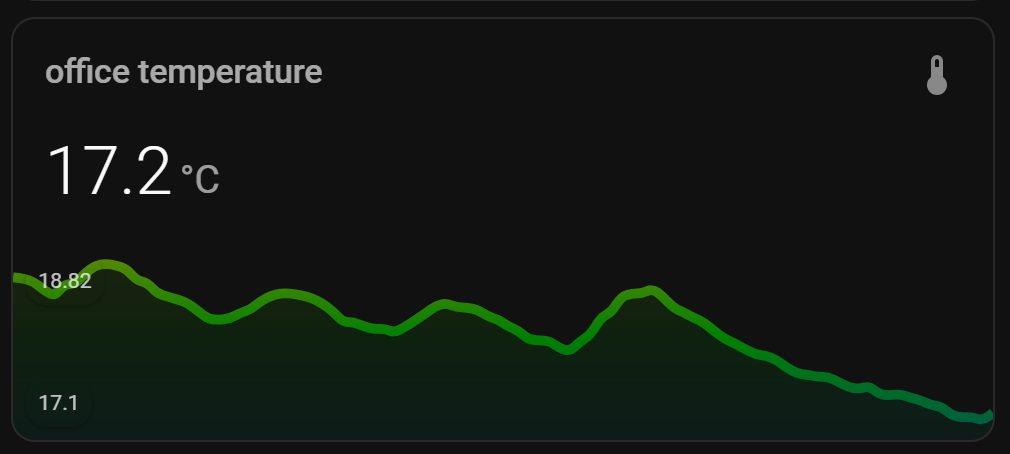
This card requires the HACS integration mini-graph-card.
Install this integration via this button
# Source code by vdbrink.github.io
# Mini-graph card with the room temperature
# Dashboard mini-graph card code with a colored line
type: custom:mini-graph-card
entities:
  - sensor.espscd40_co2_temperature
show:
  labels: true
hours_to_show: 4
points_per_hour: 24
color_thresholds:
  - value: 15
    color: "#0000FF"
  - value: 18
    color: "#008000"
  - value: 20
    color: "#f39c12"
  - value: 21
    color: "#d35400"
  - value: 23
    color: "#c0392b"
Multiple lines
One line for a fixed 23 value, one for the room temperature on one side and one for the temperature on the other side of the room.
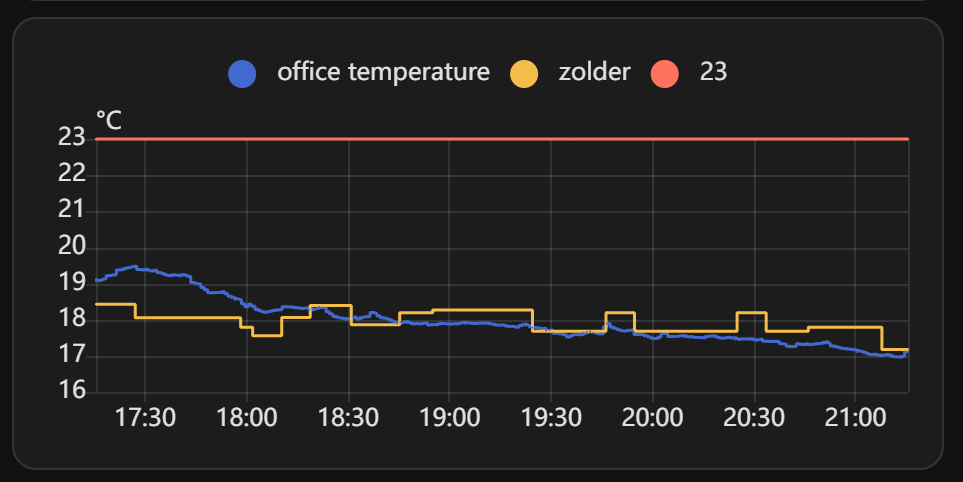
# Source code by vdbrink.github.io
# History graph card with three lines
# Dashboard history graph card code with multiple lines
type: history-graph
entities:
  - entity: sensor.espscd40_co2_temperature
  - entity: sensor.temp_temperature
  - entity: sensor.temp_value_23
hours_to_show: 4
CO2
Colored line
For the current CO2 value in the room, I used my own DIY ESPHome CO2, temperature, humidity sensor.
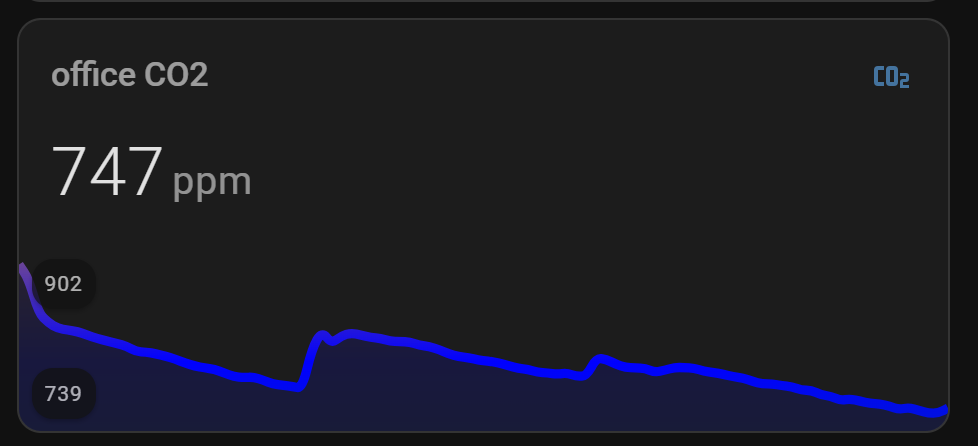
# Source code by vdbrink.github.io
# Mini-graph card with the room CO2 value
# Dashboard mini-graph card code with a colored line
type: custom:mini-graph-card
entities:
  - sensor.scd40_co2
show:
  labels: true
hours_to_show: 4
points_per_hour: 24
color_thresholds:
  - value: 400
    color: "#008000"
  - value: 800
    color: "#0000FF"
  - value: 1000
    color: "#f39c12"
  - value: 1200
    color: "#d35400"
  - value: 2000
    color: "#c0392b"
Multiple lines
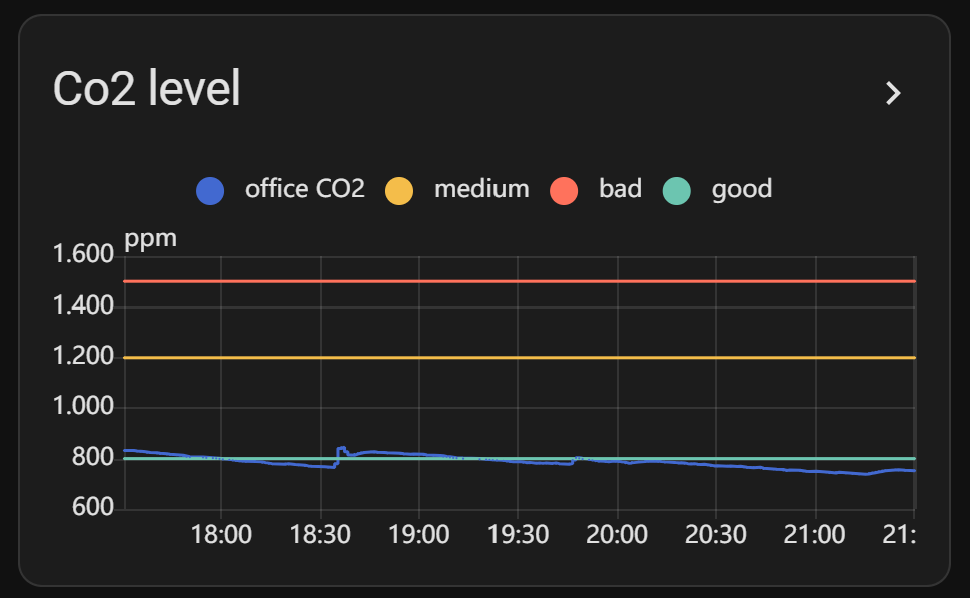
# Source code by vdbrink.github.io
# History graph card with the CO2 value
# Dashboard history graph card code with multiple lines
type: history-graph
entities:
- entity: sensor.scd40_co2
- entity: sensor.co2_value_1200
- entity: sensor.co2_value_1500
- entity: sensor.co2_value_800
  logarithmic_scale: false
  hours_to_show: 4
  title: Co2 level
Humidity
For the current room humidity, I used my own DIY ESPHome CO2, temperature, humidity sensor.
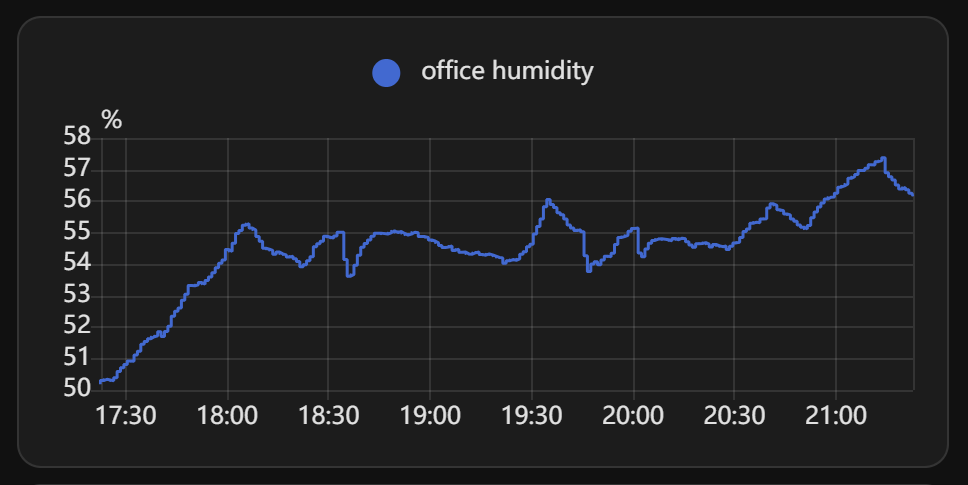
# Source code by vdbrink.github.io
# History graph card with the room humidity
# Dashboard history graph card code for the humidity
type: history-graph
entities:
    - entity: sensor.espscd40_co2_humidity
hours_to_show: 4
News headline
For the latest news, I used the web scraper to create a sensor based on the news website headline.
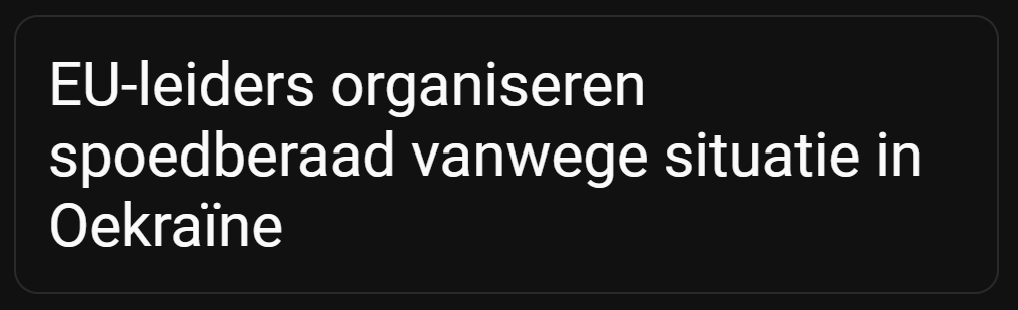
# Source code by vdbrink.github.io
# Dashboard markdown card code for the news headline
type: markdown
content: |
  {{ states('sensor.web_scrape') }}
card_mod:
  style:
    ha-markdown:
      $: |
        p {
          font-size: 30px;
          line-height: 35px;
        }
Conditional elements
Mushrooms
# Source code by vdbrink.github.io
# Dashboard Mushroom chips card code with conditions
- type: custom:mushroom-chips-card
    chips:
        - type: conditional
          conditions:
            - entity: sensor.knmi_weercode
              state_not: Code groen
          chip:
            type: template
            icon: mdi:weather-lightning-rainy
            icon_color: |-
              {% if is_state('sensor.knmi_weercode', 'Code groen') %}
                 green
              {% elif is_state('sensor.knmi_weercode', 'Code geel') %}
                 yellow
              {% elif is_state('sensor.knmi_weercode', 'Code rood') %}
                 red
              {% else %}
                 1C1C1C
              {% endif %}
            entity: sensor.knmi_weercode
            content: ""
            tap_action:
              action: url
              url_path: https://www.knmi.nl/nederland-nu/weer/waarschuwingen/zuid-holland
            card_mod: null
          - type: conditional
            conditions:
              - entity: binary_sensor.rain_expected_2
                state: "on"
                content: ""
            chip:
              type: template
              entity: binary_sensor.rain_expected_2
              icon: mdi:weather-pouring
              icon_color: red
              content: ""
          - type: conditional
            conditions:
              - entity: binary_sensor.rain_expected_2
                state: "on"
                content: ""
            chip:
              type: entity
              icon: mdi:clock
              icon_color: blue
              entity: sensor.rain_expected_time
          - type: entity
            entity: sensor.tempest_temperature_feels_like_rounded
            icon: mdi:hand-back-right
            tap_action:
              action: navigate
              navigation_path: /lovelace-diverse/test2
          - type: entity
            entity: sensor.office_chair_occupancy
          - type: conditional
            conditions:
              - entity: switch.blitzsmartplug23
                state: "on"
                content: ""
            chip:
              type: entity
              icon_color: red
              entity: switch.blitzsmartplug23
- type: conditional
  conditions:
    - condition: numeric_state
      entity: sensor.scd40_co2
      above: 800
  card:
    type: entities
    entities:
      - entity: sensor.scd40_co2
    card_mod:
      style: |
        ha-card {
           --ha-card-background:
          {% if states('sensor.scd40_co2') | int > 800 %}
           #ff4500;
          {% elif states('sensor.scd40_co2') | int > 1000 %}
           #ff4500;
          {% elif states('sensor.scd40_co2') | int > 1200 %}
           #ffd700;
          {% else %}
           #008000;
          {% endif %}
          --paper-item-icon-color:black;
          color: black;
          font-size: 25px;
          font-weight: bold;
         }
- type: conditional
  conditions:
    - condition: numeric_state
      entity: sensor.espscd40_co2_temperature
      above: 23
  card:
    type: entities
    entities:
      - entity: sensor.espscd40_co2_temperature
    card_mod:
      style: |
        ha-card {
           --ha-card-background:
          {% if states('sensor.espscd40_co2_temperature') | int > 18 %}
           #ff4500;
          {% elif states('sensor.espscd40_co2_temperature') | int > 23 %}
           #ff4500;
          {% elif states('sensor.espscd40_co2_temperature') | int > 24 %}
           #ffd700;
          {% else %}
           #008000;
          {% endif %}
          --paper-item-icon-color:black;
          color: black;
          font-size: 25px;
          font-weight: bold;
         }
- type: conditional
  conditions:
    - condition: state
      entity: input_boolean.frontdoor_detection_mode
      state: "on"
  card:
    type: custom:webrtc-camera
    url: rtsp://username:password@192.168.1.174:554//h264Preview_01_main
Temperature too high
The entity used here is based on the KNMI weather alarm scraper.
# Source code by vdbrink.github.io
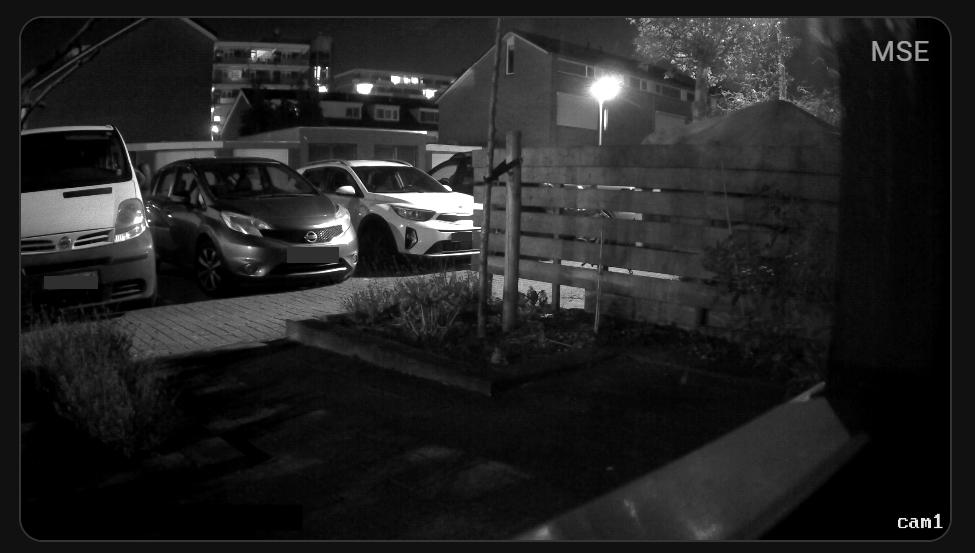
Camera stream
# Source code by vdbrink.github.io
# Dashboard conditional card code for the camera stream
type: conditional
conditions:
  - condition: state
    entity: input_boolean.frontdoor_detection
    state: "on"
card:
  type: custom:webrtc-camera
  url: rtsp://username:password@192.168.1.111:554//h264Preview_01_main
Gauge
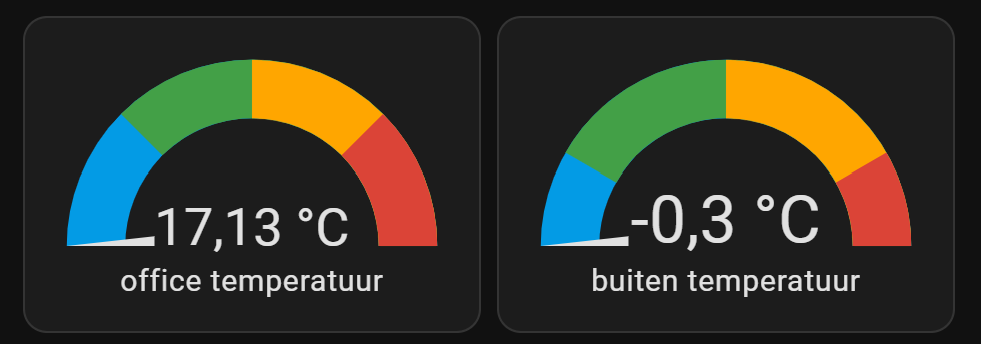
Two Gauge elements next to each other with the current room- and outside temperatures.
When you place them in a horizontal stack, they are shown smaller.
# Source code by vdbrink.github.io
# Dashboard gauge card code
type: vertical-stack
cards:
  - type: horizontal-stack
    cards:
      - type: gauge
        severity:
          green: 21
          yellow: 23
          red: 25
        entity: sensor.espscd40_co2_temperature
        max: 27
        min: 19
        needle: true
        name: office temperatuur
      - type: gauge
        severity:
          green: 21
          yellow: 23
          red: 25
        entity: sensor.tempest_st_temperature
        max: 26
        min: 20
        needle: true
        name: buiten temperatuur
Flexible Horseshoe card
This card needs extended settings.
See the repo page https://github.com/AmoebeLabs/flex-horseshoe-card for all possible details.
See also my other examples of dashboard elements.
I also have a page with more details about how to set up kiosk mode on a tablet.
« See also my other Home Assistant tips and tricks
^^ Top | Homepage | Best Buy Tips | Automation Ideas | Blog posts | Sitemap